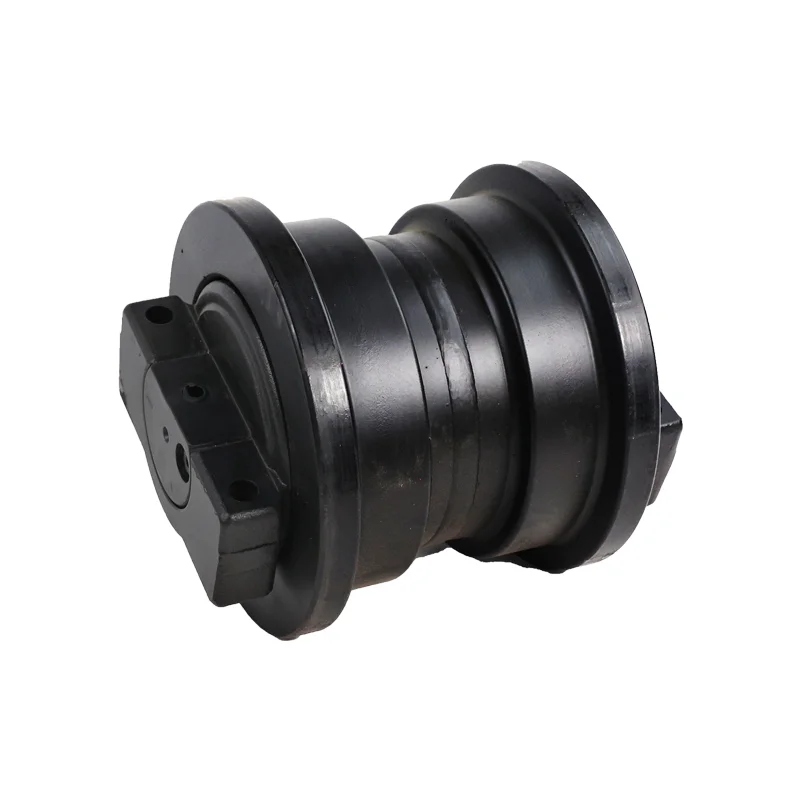
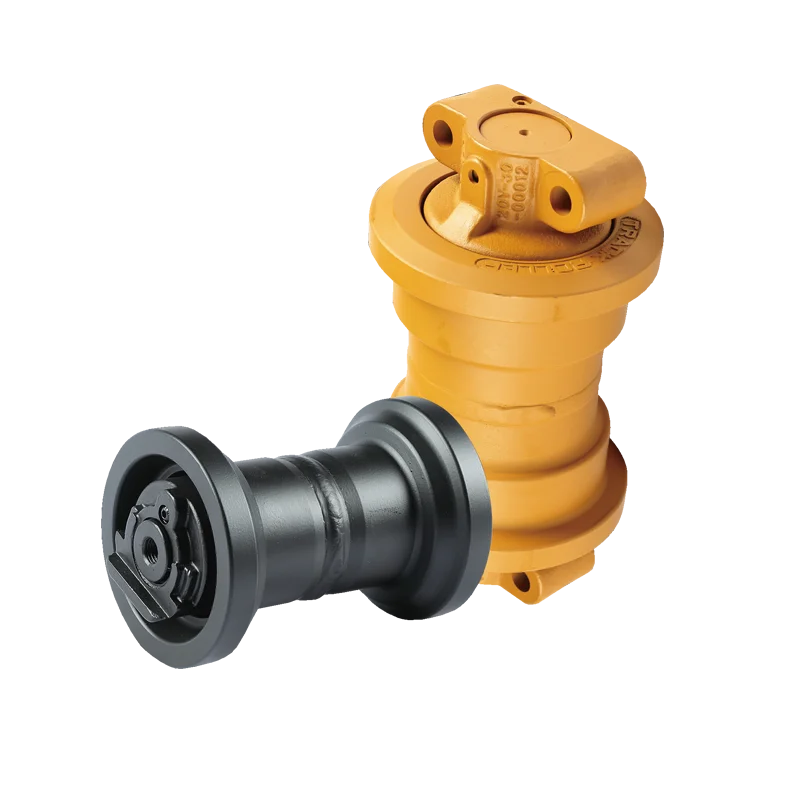
In the demanding world of heavy machinery and industrial applications, the components that operate beneath the surface often bear the brunt of operational stress, yet receive less immediate attention than their more visible counterparts. Among these foundational elements, bottom track rollers stand out as truly indispensable, forming the bedrock of mobility and stability for tracked vehicles ranging from excavators and bulldozers to drilling rigs and specialized material handling equipment. These seemingly simple cylindrical devices, often numbering in the dozens on a single machine, perform the monumental task of supporting the entire weight of the equipment and its load, guiding the track links, and facilitating smooth movement across varied, often challenging terrains. The continuous interaction between the track chain and the rollers generates immense friction and stress, making their design, material composition, and manufacturing precision absolutely paramount to overall machine performance and longevity. A momentary failure in even one of these critical components can trigger a cascade of issues, leading to unscheduled downtime, costly repairs, and significant productivity losses. Industry data consistently highlights that undercarriage components, including track rollers, account for a substantial portion of machinery maintenance budgets, sometimes exceeding 50% over the lifetime of the equipment. This staggering figure underscores not just the wear and tear these components endure, but also the immense financial implications of neglecting their quality and timely maintenance. Investing in premium bottom track rollers is not merely a purchasing decision; it is a strategic imperative that directly impacts operational efficiency, safety, and profitability. Their robust design must withstand extreme pressures, abrasive conditions, temperature fluctuations, and corrosive environments, all while maintaining precise alignment to prevent track derailment and uneven wear. The intricate balance between material hardness, toughness, and wear resistance is a testament to the sophisticated engineering involved in producing rollers that can truly perform their vital, unrelenting role.
Unveiling the Engineering Brilliance Behind Advanced Rollers
The performance of any heavy machinery is profoundly influenced by the quality and design of its undercarriage components, with track rollers playing a central role. Far from being simple steel cylinders, modern track rollers are products of advanced engineering, integrating sophisticated material science, precision manufacturing techniques, and innovative design features to deliver unparalleled durability and operational efficiency. At the core of their resilience lies the judicious selection of high-grade steel alloys, typically proprietary blends of boron, manganese, and chromium. These alloys are chosen for their superior strength-to-weight ratio and inherent wear resistance. However, the raw material is only the beginning. The transformation into a high-performance roller involves meticulously controlled heat treatment processes, such as induction hardening and tempering. This creates a differentially hardened surface, where the outer tread and flange areas achieve exceptional hardness (typically HRC 56-62) to resist abrasive wear and impact, while the core remains tougher and more ductile, preventing brittle fracture under heavy loads. This dual-zone hardening strategy is critical for extending service life, sometimes by as much as 30-40% compared to rollers without optimized heat treatment. Beyond metallurgy, contemporary roller designs often incorporate advanced sealing systems, like duo-cone seals or floating seals, which are engineered to create a robust barrier against contaminants such as dust, mud, and water. This prevents premature bearing failure and ensures the integrity of the internal lubrication system. The internal bearings themselves are precision-machined, often incorporating specialized materials or coatings to minimize friction and heat generation, which further enhances energy efficiency and reduces operational costs. Furthermore, many high-quality rollers feature a large oil reservoir filled with specific high-viscosity lubricants designed to maintain optimal performance across a wide temperature range, significantly extending lubrication intervals and reducing maintenance downtime. The geometry of the roller's tread and flange is also meticulously optimized, often through finite element analysis (FEA), to ensure uniform load distribution, minimize stress concentrations, and provide precise track guiding, preventing premature wear on both the roller and the track chain. These innovations collectively contribute to rollers that not only support immense weight but do so reliably, economically, and with significantly reduced environmental impact due to extended lifespans and lower energy consumption.
Quantifying Operational Gains: The Economic Impact of Superior Rollers
The initial investment in high-quality undercarriage components, especially track rollers, might seem higher at first glance, but the long-term economic benefits and return on investment are substantial and readily quantifiable. Inferior rollers, prone to premature wear, bearing failure, or seal breaches, trigger a cascade of negative financial consequences. For instance, a single failed roller can lead to uneven track tension, increased stress on adjacent rollers, and accelerated wear on track links and sprockets, potentially necessitating an entire undercarriage overhaul much sooner than anticipated. This translates into hundreds of hours of unscheduled downtime, which for a typical large excavator or dozer, can mean revenue losses of thousands of dollars per hour. In contrast, superior rollers, engineered for extreme durability and precision, directly contribute to extended component lifecycles, reduced maintenance frequency, and improved fuel efficiency. Data from field tests consistently shows that premium rollers can extend the operational life of an undercarriage by 25-50% compared to standard alternatives. This translates into fewer replacements, lower labor costs associated with component swaps, and a significant reduction in parts inventory. Moreover, the smoother operation facilitated by well-maintained, high-quality rollers reduces drag and friction within the track system, which in turn diminishes the load on the machine's engine and hydraulic system. This often results in a measurable improvement in fuel economy, with documented savings of 3-7% in fuel consumption over extended periods. For fleets operating numerous machines, these percentages can amount to hundreds of thousands of dollars annually. Consider a scenario where a fleet of 10 bulldozers, each consuming 20 gallons of diesel per hour, operates 2,000 hours per year. A modest 5% fuel saving from optimized undercarriage components would yield an annual saving of 20,000 gallons of fuel. At $4 per gallon, this is an $80,000 saving in fuel costs alone. When factoring in the reduced downtime and extended component life, the total cost of ownership for machinery equipped with high-grade rollers can decrease by 15-20% over the equipment's lifespan, demonstrating that the initial investment in quality is truly an investment in profitability and sustained operational excellence.
Navigating the Market: A Comparative Analysis of Roller Manufacturers
Choosing the right track roller manufacturer is a critical decision that impacts not only the immediate performance but also the long-term operational costs and reliability of heavy equipment. The market offers a wide array of manufacturers, ranging from Original Equipment Manufacturers (OEMs) who supply parts specifically designed for their machines, to Aftermarket (AM) suppliers who provide compatible components often at varying price points and quality levels. When evaluating potential suppliers, it is imperative to look beyond just the purchase price and consider factors such as material quality, manufacturing processes, warranty terms, and the availability of technical support and customization options. High-tier OEMs typically offer components designed to exacting specifications, often with proprietary alloys and heat treatments, ensuring a perfect fit and performance matched to the machine's design parameters. However, their products often come at a premium. Reputable aftermarket manufacturers, on the other hand, can offer compelling alternatives, often employing similar high-quality materials and advanced manufacturing techniques at a more competitive price point, provided they adhere to stringent quality control standards. It is crucial for buyers to scrutinize certifications, track records, and customer testimonials. Key differentiators include the depth of engineering expertise, the ability to provide custom solutions for unique operating environments, and the robustness of their after-sales service. A manufacturer offering a strong warranty and readily available technical assistance can significantly mitigate risks. Below is a comparative table illustrating typical distinctions:
Key Differentiators Among Track Roller Manufacturers | |||
Feature | OEM Manufacturer | Premium Aftermarket (Tier 1) | Standard Aftermarket (Tier 2/3) |
Material Quality & Composition | Proprietary high-grade alloys, precise chemical composition, optimized for specific machine models. | High-grade alloys, often exceeding or matching OEM specifications, focus on durability. | Standard alloys, may vary in consistency, sometimes lower-cost materials. |
Heat Treatment Process | Advanced induction hardening, multi-stage tempering for differential hardness, precise depth control. | Sophisticated heat treatment, robust hardening depth, consistent quality control. | Basic through-hardening, less precise control, potentially uneven hardness. |
Seal System Technology | Advanced duo-cone / floating seal designs, proprietary rubber compounds, extreme contaminant resistance. | High-quality floating seals, reliable sealing in most conditions, good contaminant protection. | Basic lip seals or simpler designs, limited contaminant protection, higher leak risk. |
Bearing & Shaft Precision | Precision-machined, high-tolerance bearings and shafts, minimal runout, extended life. | Good precision, reliable bearing performance, acceptable tolerances. | Standard machining, higher tolerances, increased friction and wear potential. |
Customization Options | Limited, as standard parts are optimized for their own machines. | Often flexible for specific applications (e.g., extreme temp, corrosive environments). | Very limited or non-existent. |
Warranty Period | Typically 12-24 months, comprehensive coverage. | Comparable to OEM, often 12-18 months, strong performance guarantees. | Shorter, sometimes 6-12 months, more restrictive terms. |
Price Range | Highest | Mid-to-High (Excellent Value) | Lowest (Higher Long-Term Risk) |
Ultimately, the decision should align with the operational demands and long-term cost strategy. While OEM parts offer guaranteed compatibility, premium aftermarket options can provide a superior balance of performance and cost-effectiveness, especially for specialized needs.
Precision-Engineered Solutions: The Art of Custom Bottom Track Rollers
Standard track rollers are designed to meet a broad range of operational requirements, but certain specialized applications and extreme environments demand a more tailored approach. This is where the art and science of custom-engineered solutions come into play, pushing the boundaries of what track rollers can achieve. Customization goes beyond simple sizing adjustments; it involves a deep understanding of the specific challenges faced by a machine in its unique operating context. For instance, equipment operating in extremely cold climates, such as Arctic mining or construction projects, requires rollers with specialized alloys and lubricants that can maintain fluidity and mechanical integrity at temperatures far below freezing, preventing brittle fracture and ensuring smooth operation. Conversely, machinery deployed in high-temperature environments, like steel mills or desert operations, needs rollers with enhanced heat dissipation properties and high-temperature-resistant seals and lubricants to prevent premature degradation. Corrosive environments, prevalent in chemical plants, coastal construction, or waste management, necessitate the use of specialized coatings or corrosion-resistant materials, such as stainless steel components or specific ceramic treatments, to protect against chemical attack and extend service life. Furthermore, applications involving exceptionally heavy loads, such as massive draglines or port cranes, might require rollers with reinforced shafts, increased bearing capacity, or unique flange designs to handle the extreme stress and prevent deformation or premature wear. The customization process typically begins with a comprehensive consultation, where engineers meticulously analyze the operational environment, load profiles, speed requirements, and maintenance protocols. This data informs the design phase, which utilizes advanced CAD/CAM software and finite element analysis (FEA) to simulate stress distribution and predict performance under various conditions. Prototypes are then often manufactured and rigorously tested in controlled environments, sometimes followed by field trials, to validate the design's effectiveness. This iterative process ensures that the final custom track rollers are precisely engineered to overcome specific operational hurdles, delivering optimized performance, extended lifespan, and ultimately, a superior return on investment that off-the-shelf solutions simply cannot match. The ability of a manufacturer to provide such bespoke solutions is a testament to their engineering prowess and commitment to solving complex customer challenges, transforming standard components into specialized tools that drive operational success in the most demanding scenarios.
Real-World Resilience: Case Studies in Diverse Industrial Applications
The impact of high-quality track rollers is best demonstrated through real-world applications where their performance directly translates into operational success and tangible cost savings. Across various industries, superior rollers have proven their worth in some of the most challenging conditions imaginable. Consider a large-scale open-pit mining operation in South America, where heavy-duty excavators and bulldozers work 24/7 in extremely abrasive and dusty conditions, moving millions of tons of ore and overburden. The original equipment rollers experienced rapid wear and frequent seal failures, leading to an average lifespan of only 1,500 hours, necessitating costly replacements every few months. By switching to custom-engineered rollers featuring advanced abrasion-resistant alloys and triple-labyrinth seals, the mine was able to extend the lifespan of their rollers to over 4,000 hours. This resulted in a dramatic reduction in unscheduled downtime by 60%, saving approximately $200,000 per machine annually in maintenance and lost productivity. Another compelling example comes from a pipeline construction project in a remote, mountainous region. The challenging terrain, characterized by steep inclines and sharp rocks, caused excessive stress on standard rollers, leading to frequent track derailments and damage to track links. A specialized roller manufacturer provided rollers with an optimized flange design, increased flange height, and a unique tread profile that significantly improved track guiding and load distribution. The implementation of these modified rollers reduced track derailment incidents by 85%, ensuring consistent progress on the pipeline and preventing costly project delays, which for such large-scale infrastructure projects can run into millions of dollars. In an agricultural context, track tractors used for tillage in vast fields often operate in extremely muddy and wet conditions, leading to seal failures and bearing contamination in standard rollers. A manufacturer developed rollers with enhanced watertight seals and specialized corrosion-resistant coatings. These rollers demonstrated an extended service life in agricultural applications by 70%, reducing farmer’s operational costs and ensuring their equipment remained operational during critical planting and harvesting seasons. These diverse case studies underscore a consistent theme: investing in superior, often customized, rollers is not an expense but a strategic decision that directly mitigates risks, enhances productivity, and delivers significant economic advantages across a spectrum of industrial operations, proving their value as critical enablers of sustained performance and profitability.
Strategic Investment: Ensuring Longevity and Performance with Premium Bottom Track Rollers
In conclusion, the performance and longevity of heavy machinery are intrinsically linked to the quality and resilience of its undercarriage components, with bottom track rollers playing an often underappreciated yet absolutely crucial role. These essential elements are not mere supporting parts; they are foundational to a machine's mobility, stability, and overall operational efficiency. The relentless demands of industrial environments, characterized by extreme loads, abrasive terrains, and challenging climatic conditions, necessitate an unwavering commitment to quality in the design, material selection, and manufacturing precision of these components. As we have explored, the difference between standard and premium rollers extends far beyond their initial purchase price. It manifests in quantifiable metrics: significantly extended operational lifespans, reduced unscheduled downtime, lower maintenance costs, and even improved fuel efficiency. The integration of advanced metallurgy, sophisticated heat treatment processes, innovative sealing systems, and precision-engineered bearing assemblies in high-quality bottom track rollers transforms them into strategic assets that deliver a substantial return on investment. Furthermore, the availability of tailored customization solutions ensures that even the most unique and demanding operational challenges can be met with components designed for optimal performance and durability. From the rigorous requirements of global mining operations to the precision needs of specialized construction projects, choosing the right track rollers is a pivotal decision that impacts an organization's bottom line and competitive edge. Therefore, prioritizing investment in superior bottom track rollers is not merely a purchasing choice but a strategic imperative that underpins the reliability, productivity, and long-term profitability of any heavy equipment fleet. It is an investment in uninterrupted operations, reduced risk, and ultimately, sustained success in demanding industrial landscapes.
Frequently Asked Questions about Bottom Track Rollers
Q1: What is the primary function of bottom track rollers?
Bottom track rollers, also known as lower rollers or track rollers, are essential components of the undercarriage of tracked heavy equipment. Their primary function is to support the entire weight of the machine, guide the track chain, and enable smooth, continuous movement across various terrains. They facilitate the distribution of the machine's weight over a larger ground area, reducing ground pressure and enhancing stability and traction.
Q2: How do material selection and heat treatment affect the lifespan of bottom track rollers?
Material selection (typically high-grade steel alloys) and precise heat treatment (like induction hardening and tempering) are critical. Optimal heat treatment creates a tough, impact-resistant core and an extremely hard, wear-resistant surface on the roller's tread and flanges. This differential hardening prevents brittle fracture while maximizing resistance to abrasive wear, significantly extending the lifespan of bottom track rollers by up to 50% compared to rollers without optimized metallurgy and heat treatment processes.
Q3: What are the key indicators that my bottom track rollers need replacement?
Key indicators for replacement include severe tread wear (flat spots or excessive concavity), damage to the flanges (chipping or cracking), oil leaks from the seal, excessive play or looseness in the bearing, and audible noises (grinding, squealing) indicating internal bearing failure. Neglecting these signs can lead to accelerated wear on other undercarriage components and potential track derailment.
Q4: Can generic or aftermarket bottom track rollers be as good as OEM parts?
Yes, reputable aftermarket manufacturers can produce bottom track rollers that meet or even exceed OEM specifications. They often use similar high-grade materials, advanced manufacturing processes, and rigorous quality control. The key is to choose Tier 1 aftermarket suppliers with a proven track record, strong warranties, and certifications, rather than lower-tier generic parts that may compromise on material quality or manufacturing precision.
Q5: How does roller design impact fuel efficiency and operational costs?
Well-designed and properly maintained track rollers minimize friction within the undercarriage system. Rollers with precision-machined bearings, effective sealing systems, and optimized tread profiles reduce rolling resistance. This lessens the load on the machine's engine and hydraulic system, leading to measurable improvements in fuel efficiency (often 3-7% savings) and reduced wear on power-train components, thereby lowering overall operational costs.
Q6: What customization options are available for bottom track rollers for specific applications?
Customization options for bottom track rollers are extensive and cater to unique operational environments. These can include specialized high-strength alloys for extreme loads, corrosion-resistant coatings for harsh chemical conditions, enhanced sealing systems for muddy or dusty environments, specialized lubricants for extreme hot or cold temperatures, and unique flange or tread profiles for improved track guiding in challenging terrains or specific track link configurations.
Q7: What is the average expected lifespan of bottom track rollers, and how can it be maximized?
The average lifespan of bottom track rollers varies significantly based on machine type, operating conditions, and maintenance practices, typically ranging from 2,000 to 8,000 hours. To maximize their lifespan, ensure regular inspection for wear and damage, maintain proper track tension, operate the machine correctly to minimize excessive spinning or turning, clean the undercarriage regularly to prevent abrasive buildup, and invest in high-quality, durable rollers from reputable manufacturers.
Post time: Nov-19-2025