In the demanding world of heavy construction and excavation, the reliability and efficiency of machinery are paramount. At the heart of an excavator's undercarriage system lies a seemingly unassuming yet fundamentally critical component: the excavator track tensioner. This device is not merely an accessory; it is the linchpin that ensures optimal track performance, operator safety, and extends the operational lifespan of the entire machine. Without proper track tension, an excavator faces a cascade of detrimental effects, ranging from increased wear on sprockets, idlers, and track links to severe de-tracking incidents that can halt operations, damage equipment, and pose significant safety risks. Industry data consistently highlights the economic impact of undercarriage issues; studies indicate that undercarriage components account for approximately 50% of an excavator’s total maintenance costs over its lifetime. A malfunctioning or improperly adjusted tensioner directly contributes to premature wear, escalating these costs significantly. For instance, an overtightened track can increase fuel consumption by 5-10% due to heightened rolling resistance, while simultaneously accelerating wear on critical components by as much as 20-30%. Conversely, a loose track is prone to de-tracking, which can result in hours of lost productivity and necessitate expensive repairs, easily exceeding several thousand dollars per incident. The integrity of the excavator track tensioner directly influences not only the smooth operation of the machine but also the long-term financial viability of excavation projects. Its design and functionality are therefore subjects of meticulous engineering, aiming to provide a consistent and optimal tension that balances operational demands with component longevity.
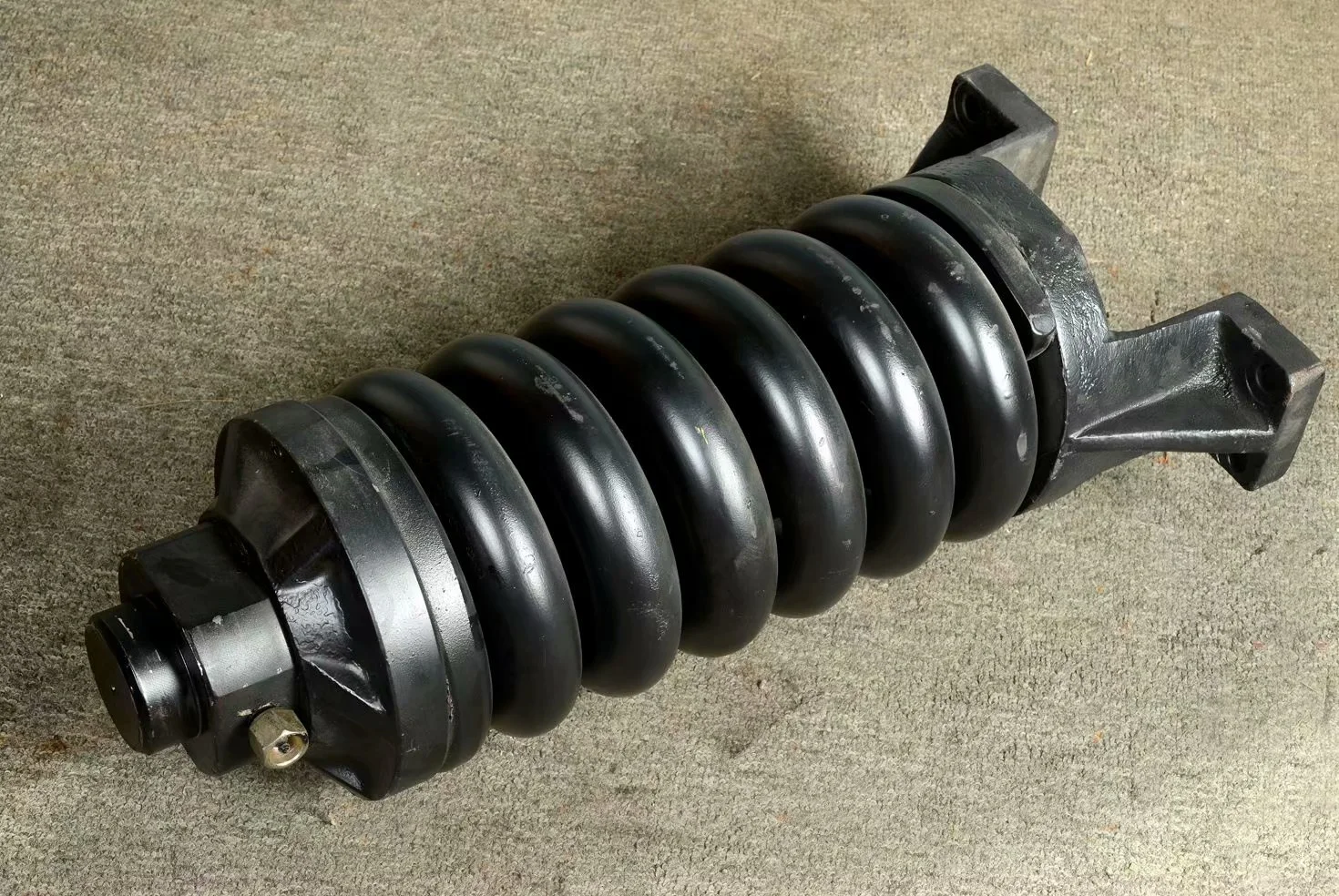
Precision Engineering and Core Technical Advantages
The engineering behind modern track tensioners showcases a blend of robust mechanics and precise hydraulic or spring-based systems designed for extreme conditions. Fundamentally, a track tensioner works by maintaining a specific amount of sag in the track chain, which is crucial for accommodating debris, reducing stress on components, and ensuring smooth rotation. The primary technical advantage of contemporary designs lies in their ability to provide consistent and adjustable tension. Most advanced systems utilize a heavy-duty recoil spring mechanism working in conjunction with a hydraulic cylinder. The spring absorbs shocks and impacts, protecting the idler and track frame from sudden jolts, while the hydraulic cylinder allows for precise adjustments to be made to the track tension. This hydraulic adjustment capability is a significant leap forward from older, purely mechanical systems, offering fine-tuning that prevents both excessive tightness and dangerous looseness. Materials science plays a vital role in these components; high-strength forged steel, often heat-treated and precision-machined, is used for critical parts like the idler yoke and adjustment rods to withstand immense compressive forces and abrasive environments. Advanced seals and hardened chrome plating on hydraulic rods prevent contamination and extend the life of the hydraulic system, reducing leaks and ensuring consistent performance. Some innovative designs even incorporate self-adjusting features or pressure-relief valves that automatically compensate for temperature changes or material buildup, thereby reducing the need for manual intervention and minimizing downtime. This sophisticated interplay of mechanical resilience and hydraulic precision ensures that the track remains optimally tensioned across varying terrains and operational stresses, mitigating wear on expensive components like rollers, sprockets, and track links, and ultimately bolstering the overall efficiency and lifespan of the excavator.
Meeting Diverse Operational Demands: Performance Benchmarks
Excavators operate in an incredibly diverse range of environments, from soft, muddy construction sites to abrasive quarries and frozen tundra. Each of these scenarios imposes unique stresses and demands on the track tensioner system, necessitating robust and adaptable performance. Performance benchmarks for these critical components are therefore centered on durability, adjustability, and resilience under extreme conditions. For instance, in rocky or highly abrasive environments, the tensioner must withstand constant shock loads and resist wear from fine particulates. Here, the strength and material composition of the idler wheel and its bearing system, along with the protective sealing of the tensioner’s internal mechanisms, become paramount. In contrast, operations in soft, muddy ground require a tensioner that can maintain tension despite potential track packing with debris, ensuring that the track doesn't become too tight. Key performance indicators (KPIs) often include the tensioner’s hydraulic pressure range, which dictates its adjustment capability, and its ability to maintain a set tension over extended periods without drift. Manufacturers also focus on the recoil spring's deflection range and load capacity, ensuring it can absorb significant impacts without reaching its yield point. Longevity is another critical benchmark, with high-quality tensioners expected to endure thousands of hours of operation under severe load cycling. Testing protocols often involve accelerated wear simulations and exposure to extreme temperatures (-40°C to +50°C) to validate their resilience. Furthermore, the ease of adjustment and maintenance is a practical performance benchmark; a tensioner designed for quick, straightforward adjustments reduces labor time and ensures that proper tension can be maintained proactively, preventing costly undercarriage failures. These diverse operational demands underscore the necessity for tensioners that are not only robust in design but also intelligently engineered to adapt and perform reliably in any environment.
Comparative Analysis of Advanced Tensioner Technologies
While the fundamental purpose of a track tensioner remains consistent, the technological approaches to achieving optimal tension vary, each offering distinct advantages and disadvantages depending on the application and operational philosophy. We can broadly categorize advanced tensioner systems by their primary tensioning mechanism and control methods, providing a comparative perspective crucial for informed decision-making. Below is a comparative analysis:
Feature/Technology | Hydraulic Cylinder with Recoil Spring | Nitrogen-Gas Accumulator Based | Advanced Integrated Smart Systems |
Primary Mechanism | Hydraulic cylinder for adjustment, large coil spring for recoil/shock absorption. | Sealed nitrogen-gas accumulator for both recoil and tension maintenance. | Electronic sensors, hydraulic cylinder, and CPU for real-time adjustment. |
Tension Adjustment | Manual greasing or bleeding via hydraulic valve. Can be somewhat slow. | System automatically maintains pressure; minimal manual adjustment. | Fully automatic, continuous real-time adjustment based on load/terrain. |
Shock Absorption | Excellent, large mechanical spring absorbs significant impact forces. | Good, gas compression provides effective cushioning. | Very good, active hydraulic response combined with robust springs. |
Complexity | Medium. Proven, reliable mechanical and hydraulic components. | Medium-High. Requires specialized charging and monitoring of gas pressure. | High. Involves electronic sensors, actuators, and control algorithms. |
Maintenance | Regular greasing, occasional hydraulic fluid check/recharge, spring inspection. | Periodic gas pressure checks, seal inspections. Less frequent manual adjustment. | Sensor calibration, software updates, traditional hydraulic maintenance. Diagnostics are key. |
Cost Implications | Standard initial cost, moderate long-term maintenance costs. | Higher initial cost due to specialized components, potentially lower routine maintenance. | Highest initial cost, potential for significant long-term savings through optimized wear and fuel efficiency. |
Best Application | General excavation, demolition, varied terrain. Robust and versatile. | Applications requiring very consistent tension, perhaps sensitive to manual adjustments. | High-precision earthmoving, long-duration projects, remote monitoring needs, maximum uptime. |
The Hydraulic Cylinder with Recoil Spring system remains the industry standard due to its proven reliability, cost-effectiveness, and robust performance across most applications. The Nitrogen-Gas Accumulator approach offers a more sealed and potentially less maintenance-intensive solution for certain specialized contexts, though it requires specific tooling for servicing. The cutting-edge Advanced Integrated Smart Systems represent the future, offering unparalleled precision, automation, and diagnostic capabilities, but come with a higher initial investment and increased complexity in terms of electronics and software. Choosing the right technology hinges on a careful assessment of budget, operational environment, maintenance capabilities, and desired performance level.
Tailored Solutions for Optimized Performance and Durability
Recognizing that no two excavation projects or operating environments are identical, the provision of tailored solutions for track tensioner systems has become increasingly critical for optimizing performance and extending machine durability. A "one-size-fits-all" approach often leads to compromises, manifesting as accelerated wear, increased fuel consumption, or unnecessary downtime. Customization begins with a thorough understanding of the specific application. For example, an excavator primarily engaged in trenching on stable ground will have different tensioner requirements than one operating in a rock quarry with constant impacts and abrasive material. Key factors considered for customization include the typical ground conditions (abrasive, soft, wet, frozen), the primary work tasks (digging, grading, lifting), typical operating hours, and even climate. For extremely abrasive environments, options might include tensioner systems with enhanced sealing mechanisms, specialized wear plates, or components manufactured from ultra-hardened alloys to resist premature degradation. In high-impact applications, a reinforced recoil spring assembly or a more sophisticated hydraulic dampening system might be engineered to absorb greater shock loads without compromising tension stability. Furthermore, for fleets operating in remote locations where maintenance access is challenging, a tensioner system designed for extended service intervals or with advanced self-diagnostic capabilities can be crucial. This might involve integrated pressure sensors that alert operators or maintenance staff to deviations from optimal tension, allowing for proactive adjustments before issues escalate. The hydraulic fluid specified for the tensioner can also be customized, selecting fluids with enhanced thermal stability for extreme temperatures or those with superior anti-wear additives for demanding conditions. Ultimately, a tailored solution involves a collaborative process between equipment owners and component manufacturers, leveraging data from operational analysis to specify a tensioner system that is not only robust but perfectly aligned with the unique demands of the machine’s intended use, thereby maximizing uptime and return on investment.
Transformative Impact: Real-World Application Case Studies
The impact of a well-specified and maintained track tensioner system is best illustrated through real-world application case studies, where the correct solution has demonstrably transformed operational efficiency and reduced costs. Consider a large-scale mining operation in a remote, highly abrasive region. Prior to implementing a customized track tensioner solution, the site experienced frequent de-tracking events, averaging three per week, each leading to 4-6 hours of lost production and requiring specialized personnel for re-tracking. This translated to an estimated annual loss of over $500,000 in downtime alone, not including the accelerated wear on undercarriage components. After consulting with an undercarriage specialist, the mining company invested in heavy-duty tensioners featuring advanced hardened steel components, triple-lip seals, and an enhanced hydraulic adjustment system designed for high-impact resistance and superior debris exclusion. The new tensioners also integrated pressure gauges for easier, more accurate daily checks. Within six months of implementation, de-tracking incidents plummeted by 90%, virtually eliminating the associated downtime and repair costs. The improved track tension consistency also led to a noticeable reduction in fuel consumption, estimated at 7% due to less rolling resistance, and extended the lifespan of track links and sprockets by an estimated 25%, further saving on replacement costs. In another example, a civil engineering project involving extensive urban demolition faced challenges with premature wear of undercarriage components, particularly track idlers, due to frequent changes in direction and impact from debris. The original equipment tensioners, while standard, were not designed for such aggressive dynamic loads. The solution involved retrofitting a specialized tensioner featuring a higher-capacity recoil spring and a hydraulic system with an active dampening valve, specifically engineered to absorb rapid load changes. This upgrade not only reduced idler wear by 35% but also minimized track vibration, improving operator comfort and control, which indirectly contributed to a 10% increase in demolition efficiency. These case studies underscore that the right excavator track tensioner is not just a replacement part; it’s a strategic investment that yields tangible benefits in productivity, longevity, and overall operational profitability.
Ensuring Longevity and the Future Evolution of the Excavator Track Tensioner
Maximizing the lifespan and performance of an excavator track tensioner hinges critically on adherence to robust maintenance protocols and a forward-looking approach to technological integration. Regular inspection is paramount; daily visual checks for leaks, abnormal wear, or signs of improper tension (such as excessive sag or stiffness) can prevent minor issues from escalating into major failures. Specific attention should be given to the hydraulic grease fitting, ensuring it’s clean and functional for easy adjustment, and to the condition of the idler wheel and its mounting points. Following manufacturer guidelines for tension adjustment based on operating conditions is essential; an overtightened track is just as detrimental as a loose one, leading to accelerated wear and increased stress on the entire undercarriage. Periodically, the track system should be cleaned of packed material to allow for proper tensioner function and to reduce abrasive wear. Lubrication of relevant components, as per the OEM schedule, prevents premature mechanical failure. Looking ahead, the future evolution of the excavator track tensioner is poised to be driven by advancements in sensor technology, IoT connectivity, and predictive analytics. Imagine tensioners equipped with embedded sensors that continuously monitor track tension, temperature, and even component wear, transmitting this data in real-time to an operator’s console or a fleet management system. This will enable truly proactive maintenance, where adjustments can be made remotely or automatically, and component replacement can be scheduled precisely before failure occurs, eliminating unplanned downtime. The integration of AI and machine learning could further refine these systems, allowing tensioners to adapt dynamically to changing ground conditions and workloads, optimizing tension in real-time for peak efficiency and minimal wear. Furthermore, ongoing research into new materials, such as advanced composites or self-healing alloys, promises tensioners that are lighter, stronger, and even more resistant to the harshest operating environments. These innovations will not only enhance the reliability and longevity of the excavator track tensioner but will fundamentally transform undercarriage management, pushing the boundaries of heavy machinery performance and operational efficiency.
FAQ: Excavator Track Tensioner
Q1: What is the primary function of an excavator track tensioner?
A1: The primary function of an excavator track tensioner is to maintain the correct amount of slack or sag in the track chain, ensuring optimal contact between the track links, sprockets, and idlers. This prevents de-tracking, reduces wear on undercarriage components, and improves overall machine performance and safety.
Q2: How do I know if my excavator track tension is incorrect?
A2: Signs of incorrect tension include excessive track sag (too loose), which can lead to de-tracking and increased impact on components, or a very tight track (too tight), which increases rolling resistance, fuel consumption, and accelerates wear on sprockets, idlers, and track links. Refer to your excavator's operation manual for the correct sag measurement.
Q3: What are the common types of track tensioner mechanisms?
A3: The most common type is a hydraulic cylinder working in conjunction with a heavy-duty recoil spring. Other technologies include nitrogen-gas accumulator-based systems and, in advanced applications, smart systems integrating electronic sensors for real-time, automatic adjustment.
Q4: Why is it important to use genuine OEM or high-quality aftermarket excavator track tensioners?
A4: Using genuine OEM or high-quality aftermarket track tensioners ensures that the component meets the precise engineering specifications and material standards required for durability and performance. Inferior parts can lead to premature failure, inadequate tensioning, and costly damage to the entire undercarriage system.
Q5: How often should I check the track tension on my excavator?
A5: Track tension should be checked daily as part of your pre-operation inspection. Adjustments may be required more frequently depending on the operating conditions, such as transitioning from soft to hard ground, or after prolonged periods of operation.
Q6: Can an excavator track tensioner affect fuel consumption?
A6: Yes, absolutely. An overtightened track significantly increases rolling resistance, forcing the engine to work harder and thus increasing fuel consumption. Conversely, an optimally tensioned track minimizes resistance, contributing to better fuel efficiency.
Q7: What preventative maintenance should be performed on an excavator track tensioner?
A7: Preventative maintenance includes regular visual inspections for damage or leaks, ensuring the hydraulic grease fitting is accessible and functional for adjustments, cleaning out packed debris from the undercarriage area, and following the manufacturer's recommended lubrication schedule for the idler bearings and other related components.
Post time: Nov-19-2025