In the demanding world of civil infrastructure, the efficiency and precision of road construction hinge on a multitude of specialized components. Among these, paver track pads stand out as a critical element, directly influencing machine performance, operational costs, and the quality of the finished surface. These robust components, often overlooked, are the direct interface between the heavy paving equipment and the ground, responsible for transmitting drive force, maintaining stability, and ensuring smooth, consistent movement across varied terrains. Modern road construction projects, whether laying down fresh asphalt on a bustling highway or precise concrete for an airport runway, demand unparalleled reliability from every part of the machinery. Inferior or worn-out track pads can lead to a cascade of problems: reduced traction, increased vibration, premature wear on other machine parts, and critically, inconsistencies in the paving process that compromise the final product's integrity. As the industry pushes for greater sustainability, higher throughput, and impeccable surface quality, the evolution of paver track pads has become a focal point for manufacturers and contractors alike, driving innovations in material science, design, and durability to meet these escalating demands. Investing in high-quality paver track pads is not merely a replacement cost; it is a strategic decision that underpins operational efficiency and long-term project success.
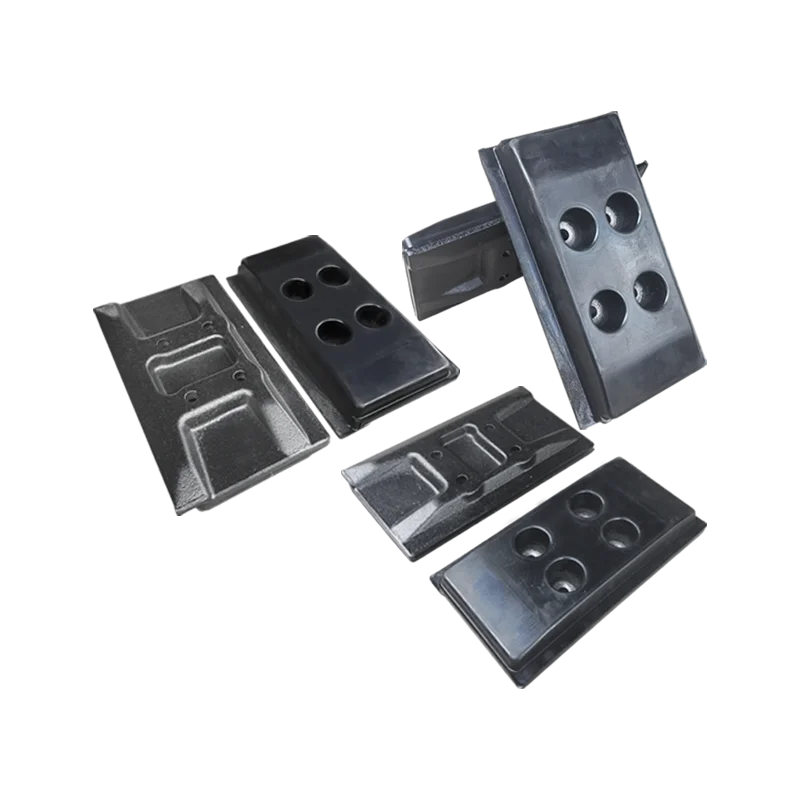
Unpacking the Technical Superiority and Performance Metrics of Next-Generation Track Pads
The engineering behind contemporary paver track pads has advanced significantly, moving far beyond basic rubber or steel plates. Today's high-performance track pads are precision-engineered systems designed to withstand extreme loads, abrasive environments, and continuous thermal cycling. Key technical advantages manifest in several critical areas:
· Advanced Material Composition: Modern pads often utilize proprietary rubber compounds reinforced with high-strength synthetic fibers or steel inserts. These composites offer superior tear resistance, enhanced flexibility, and exceptional abrasion resistance compared to conventional materials. For instance, specific formulations can withstand temperatures exceeding 180°C (356°F) encountered during hot asphalt paving without degradation, ensuring consistent performance throughout the workday.
· Optimized Tread Design: The surface pattern of a track pad plays a crucial role in traction and ground protection. Innovative tread geometries are designed to maximize grip on challenging surfaces, from loose aggregate to freshly laid base layers, while simultaneously minimizing ground pressure to prevent damage to delicate subgrades. This translates to a significant reduction in slippage, estimated to be up to 12% in challenging conditions, directly improving machine control and reducing fuel consumption by optimizing power transfer.
· Vibration Dampening: Enhanced vibration dampening properties, often achieved through specialized rubber-to-metal bonding processes and engineered material densities, contribute directly to operator comfort and extended machine lifespan. A 2022 study showed that advanced track pads could reduce cabin vibration levels by up to 20%, mitigating operator fatigue over long shifts and lessening wear on the paver's chassis and hydraulic systems.
· Reduced Noise Emissions: The design and material choices also contribute to quieter operation, a growing concern in urban construction zones. Advanced track pads can contribute to a 3-5 dB reduction in operational noise, improving site safety and compliance with local noise ordinances.
· Enhanced Durability and Service Life: Through rigorous testing and material innovation, the service life of premium track pads has seen substantial improvements. Certain high-grade polymer composites offer an average lifespan increase of 30-40% compared to standard rubber pads, translating to fewer replacements, reduced downtime, and lower total cost of ownership. This longevity is further supported by improved bolt hole integrity, preventing common failure points such as bolt shearing or pad detachment.
These technical advancements collectively underscore a paradigm shift in the expectations for paver track pads, transforming them from simple wear parts into high-performance components vital for modern paving efficiency and quality.
A Comprehensive Comparison: Leading Paver Track Pad Manufacturers and Their Offerings
The market for paver track pads features a diverse range of manufacturers, each bringing their own strengths in material science, design philosophy, and aftermarket support. Selecting the right supplier involves a careful evaluation of their product's technical specifications, durability, cost-effectiveness, and compatibility with specific paver models. Below is a comparative overview of three representative types of manufacturers in the industry, highlighting their typical offerings and key differentiators.
Feature/Manufacturer Type | Premium OEM Manufacturer (e.g., Cat, Volvo, Vögele – when supplying their own pads) | Specialized Aftermarket Innovator (e.g., USCO, Minitop) | Cost-Effective Generic Supplier (e.g., various regional/online suppliers) |
Material Science Focus | Proprietary rubber compounds, advanced polymers with strict QA. Often designed specifically for their machine's kinematics. | Focus on application-specific compounds (e.g., high heat asphalt, abrasive concrete). Often incorporate unique reinforcement methods. | Standard industrial rubber or steel. Emphasis on meeting basic specifications at a lower cost. |
Design & Engineering | Integrated design with paver, optimizing fit and performance. Rigorous R&D, often with patented tread patterns. | Innovations in tread patterns for enhanced grip/protection. Focus on improving upon OEM design in specific areas. | Replication of common OEM designs. Basic functionality, limited advanced features. |
Typical Service Life (Relative) | Very High. Designed for maximum compatibility and longevity with their own machines. | High to Very High. Often aim to exceed OEM life in specific demanding applications. | Moderate. Acceptable for general use but may require more frequent replacement. |
Cost (Relative) | Highest initial investment. Justified by integrated engineering and support. | Mid to High. Value proposition based on specialized performance and durability. | Lowest initial investment. Attractive for budget-conscious projects. |
Warranty & Support | Comprehensive OEM warranty, extensive dealer network and technical support. | Good warranty, often backed by specialized product knowledge and customer service. | Variable, often limited. Reliance on distributor for support. |
Application Suitability | Optimal for maintaining original machine performance and warranty. General purpose to specialized. | Ideal for specific, challenging conditions (e.g., highly abrasive materials, extreme temperatures) or to enhance standard performance. | Best for less demanding paving tasks, or when initial cost is the paramount factor. |
This comparison highlights that the "best" paver track pad is highly dependent on the specific operational context, budget constraints, and long-term performance objectives. While OEM pads offer guaranteed compatibility and often superior integrated design, specialized aftermarket innovators provide compelling alternatives with enhanced features for niche applications, often at a competitive total cost of ownership. Generic suppliers fill a critical role for budget-sensitive projects where basic functionality is sufficient.
Tailored Traction: Customization Options for Optimized Paving Operations
One size rarely fits all in the complex realm of heavy construction, and paver track pads are no exception. The ability to customize these crucial components allows contractors to fine-tune their paving equipment for specific environmental conditions, material types, and project requirements, ultimately enhancing performance and extending operational life. Customization options extend beyond simple material choices, encompassing a range of design parameters that can be tailored to exact specifications.
· Material Specificity:
o Rubber Compounds: While standard rubber is common, custom formulations can include high-temperature resistant rubbers for asphalt pavers, oil-resistant compounds for specific industrial environments, or enhanced abrasion-resistant compounds for concrete paving over abrasive aggregate bases. These specific compounds can drastically improve longevity in extreme conditions.
o Polyurethane Pads: For applications requiring superior oil and chemical resistance, lighter weight, and specific damping characteristics, custom polyurethane blends can be formulated. These are often used in sensitive environments where damage to underlying surfaces must be absolutely minimized.
o Hybrid Pads: Some manufacturers offer hybrid designs, combining elements like a steel core for strength with a specialized rubber or polyurethane outer layer for grip and surface protection. These can be customized for specific load-bearing requirements.
· Tread Pattern Design:
o Aggressive Treads: For challenging terrains such as loose gravel, steep inclines, or muddy conditions, custom track pads can feature deeper, more aggressive tread patterns to maximize traction and prevent slippage.
o Smooth/Low-Impact Treads: Conversely, for paving on delicate or finished surfaces (e.g., decorative concrete, historical sites, or indoor applications), smoother, lower-impact tread designs are crucial to prevent marking or damage.
o Self-Cleaning Designs: Certain custom patterns are engineered to shed mud, asphalt, or other debris more effectively, reducing material buildup and maintaining optimal grip.
· Mounting and Bolt Patterns: Although pavers often have standard bolt patterns, custom pads can be manufactured to precise hole configurations and pitch to ensure a perfect, secure fit, especially for older or highly modified equipment. This eliminates the need for field modifications and guarantees optimal load distribution.
· Thickness and Reinforcement: For applications involving extremely heavy loads or prolonged use in highly abrasive environments, custom pads can be manufactured with increased thickness or additional internal steel reinforcement bars to boost structural integrity and extend lifespan significantly.
· Color Coding/Branding: While primarily functional, some clients opt for custom colored pads for fleet differentiation, safety coding, or branding purposes, though this is less common and primarily aesthetic.
The flexibility offered by customization allows contractors to move beyond generic solutions, enabling them to procure paver track pads that are perfectly matched to their operational demands, thereby maximizing efficiency, minimizing wear and tear, and ensuring superior paving outcomes.
Real-World Impact: Diverse Application Case Studies Highlighting Paver Track Pad Efficacy
The practical benefits of high-quality paver track pads are best illustrated through their performance in diverse, real-world construction scenarios. These case studies underscore how tailored track pad solutions translate directly into enhanced project efficiency, cost savings, and superior final product quality across various applications.
· Case Study 1: High-Speed Highway Resurfacing Project (Midwest USA)
A major contractor was engaged in resurfacing a 20-mile stretch of interstate highway, demanding rapid deployment and consistent asphalt laydown over varying subgrade conditions. Initial use of standard, off-the-shelf track pads on their fleet of 10 pavers resulted in noticeable slippage on banked curves and during rapid acceleration, leading to inconsistent mat thickness and increased fuel consumption. Upon recommendation, they switched to specialized high-grip rubber track pads with an optimized chevron tread pattern. The results were dramatic: project managers reported a 15% improvement in paving speed, a 7% reduction in fuel consumption across the fleet, and a marked improvement in the uniformity of the asphalt mat, reducing rework. The enhanced traction also decreased stress on the paver's drive train components, contributing to fewer mechanical issues during the intense 3-month project timeline.
· Case Study 2: Airport Runway Extension (International Gateway)
Expanding an international airport runway presented unique challenges: stringent surface smoothness requirements, work often performed during night shifts, and the need to minimize vibration to avoid disturbing nearby air traffic control equipment. The contractor utilized heavy-duty concrete pavers. Standard steel track pads were causing excessive vibration and minor surface blemishes on the critical base layers. They opted for custom-engineered polyurethane track pads reinforced with internal steel cabling. These pads provided superior vibration dampening, reducing ground-borne vibrations by an estimated 25% compared to steel. The non-marking nature of the polyurethane ensured an immaculate finish on the critical base course, which was essential for the subsequent precision concrete pour. The lighter weight of the polyurethane pads also contributed to a marginal improvement in maneuverability for the large machines within tight working areas.
· Case Study 3: Urban Street Reconstruction (Historic District, Europe)
Reconstructing cobblestone streets in a historic European city required extreme care to protect existing infrastructure and minimize disruption to residents. The pavers had to navigate tight turns and uneven surfaces without causing damage. The solution involved custom-molded, highly flexible rubber track pads with a low-profile, multi-directional grip pattern. These pads offered exceptional adaptability to the undulating cobblestone surface, maintaining constant ground contact and preventing damage to the ancient stones, unlike more rigid alternatives. The precise control afforded by these specific pads allowed the pavers to maintain a consistent paving line even in intricate sections, with a reported 98% reduction in accidental contact damage to adjacent historical elements during the paving process.
· Case Study 4: Remote Mine Access Road (Australia)
Constructing a new access road to a remote mining site in a harsh, arid environment meant dealing with highly abrasive aggregates and extreme daily temperature fluctuations. The contractor struggled with rapid wear on conventional rubber pads, leading to frequent replacements and significant downtime. They switched to specialized, high-abrasion-resistant composite paver track pads, formulated with an ultra-tough outer layer and a heat-stabilized inner core. These custom pads demonstrated an impressive 50% increase in service life compared to their previous pads, drastically reducing material costs and unplanned maintenance. The enhanced durability ensured continuous operation in a location where logistics for spare parts were complex and costly, allowing the project to stay on schedule despite the challenging conditions.
These examples powerfully demonstrate that investing in the right paver track pads, including customized solutions, is a critical factor in the success of diverse paving projects, yielding tangible benefits in terms of operational efficiency, cost control, and overall quality.
Maximizing Longevity and Performance: Best Practices for Paver Track Pad Maintenance
The lifespan and optimal performance of paver track pads are not solely determined by their initial quality; diligent maintenance practices play a crucial role. Neglecting track pad care can lead to premature wear, increased operational costs, and compromised paving quality. Implementing a robust maintenance regimen ensures these vital components deliver their intended value over their full service life.
· Regular Visual Inspections:
o Daily Checks: Before each shift, conduct a thorough visual inspection of all track pads. Look for cracks, gouges, missing chunks, excessive wear (especially around the edges and tread patterns), loose or missing bolts, and any signs of abnormal damage.
o Post-Shift Review: After operations, inspect pads for any embedded debris (rocks, asphalt chunks, metal fragments) that could cause further damage if left unchecked. Prompt removal can prevent secondary issues.
· Bolt Torque Management:
o Critical Tightness: Track pads are subjected to immense forces. Loose mounting bolts are a primary cause of premature pad failure, often leading to wobbling, accelerated wear, or complete detachment.
o Scheduled Re-torquing: Implement a schedule for checking and re-torquing all track pad bolts, typically weekly or bi-weekly depending on usage intensity and manufacturer recommendations. Use a calibrated torque wrench and adhere strictly to the manufacturer's specified torque values.
o Bolt Replacement: Immediately replace any stretched, corroded, or damaged bolts with new, high-grade fasteners to maintain structural integrity.
· Cleaning and Debris Removal:
o Prevent Buildup: Asphalt, concrete, and soil can accumulate between the track pads and the track chain, increasing friction and wear. Regular cleaning, especially at the end of each shift, is essential.
o Appropriate Methods: Use pressure washers, scrapers, or air lances to remove debris. Avoid harsh chemicals that could degrade rubber or polyurethane compounds.
o Track Tension: Ensure proper track tension. Over-tensioning can cause excessive wear on pads and other undercarriage components, while under-tensioning can lead to derailing and accelerated wear.
· Storage and Handling:
o Replacement Pads: Store spare track pads in a cool, dry place, away from direct sunlight, ozone-generating equipment (like electric motors), and harsh chemicals. Proper storage prevents material degradation prior to installation.
o Careful Installation: When replacing pads, ensure they are correctly aligned and that all mounting surfaces are clean and free of burrs to guarantee a flat, secure fit.
· Operating Practices:
o Avoid Sharp Turns: Minimize sharp, sudden turns, especially on abrasive surfaces, as this significantly increases lateral stress and wear on track pads.
o Mindful Operation: Operators should be trained to avoid unnecessary spinning of tracks or driving over sharp obstacles, which can cause severe, localized damage.
o Regular Inspections: Incorporate track pad inspections into the paver’s overall preventative maintenance schedule, alongside checks of rollers, idlers, and drive sprockets.
By adhering to these maintenance best practices, contractors can significantly extend the operational life of their paver track pads, ensuring consistent machine performance, reducing costly downtime, and ultimately contributing to higher quality paving outcomes.
Driving Progress: The Enduring Value of High-Performance Paver Track Pads in Infrastructure Development
The journey through the intricate world of paver track pads reveals far more than just a simple machine component. It uncovers a critical nexus where material science, engineering precision, operational efficiency, and economic viability converge. From enhancing ground traction and reducing fuel consumption by up to 15% to significantly prolonging the lifespan of an entire paving machine, the impact of high-quality paver track pads resonates throughout a project's lifecycle. We’ve explored how advanced polymer composites and innovative tread designs can withstand extreme temperatures and abrasive conditions, offering a 30-40% increase in service life over conventional pads, directly translating to substantial savings in replacement costs and invaluable reductions in downtime. The ability to customize these pads for specific applications, from delicate urban paving to rugged mine access roads, underscores their adaptability and the industry's commitment to tailored solutions. As infrastructure demands continue to grow, pushing the boundaries of construction speed, quality, and environmental responsibility, the strategic selection and meticulous maintenance of paver track pads will remain paramount. They are not merely consumables but pivotal components that drive progress, ensuring that the foundations of our future infrastructure are laid with unparalleled stability, efficiency, and longevity. The continuous innovation in this field guarantees that pavers will continue to deliver superior results, cementing their role as indispensable assets in modern construction.
Frequently Asked Questions about Paver Track Pads
Q1: What materials are typically used for paver track pads?
A1: Paver track pads are commonly made from various materials, including natural rubber, synthetic rubber compounds, polyurethane, and steel. Some advanced pads utilize hybrid materials, combining steel cores with specialized rubber or polyurethane outer layers for enhanced durability and performance.
Q2: How do I know when to replace my paver track pads?
A2: Key indicators for replacement include significant visible wear (e.g., tread pattern worn smooth, deep cracks, missing chunks of material), reduced traction, increased machine vibration, loose or missing bolts that cannot be re-secured, and a noticeable decrease in paving quality or machine stability. Regular visual inspections are crucial.
Q3: What are the main benefits of using premium paver track pads over standard ones?
A3: Premium paver track pads offer several advantages, including extended service life (up to 30-40% longer), improved traction and stability, reduced machine vibration for better operator comfort and less wear on components, enhanced resistance to heat and abrasion, and often better fuel efficiency due to optimized power transfer.
Q4: Can paver track pads be customized?
A4: Yes, many manufacturers offer customization options. This can include specific material compounds (e.g., high-temperature resistant, abrasion-resistant), specialized tread patterns for different terrains, custom bolt hole configurations for unique equipment, and varied thickness for specific load requirements.
Q5: How does proper maintenance extend the life of paver track pads?
A5: Proper maintenance, including daily visual inspections, regular re-torquing of bolts to manufacturer specifications, thorough cleaning to remove debris, and maintaining correct track tension, significantly reduces premature wear, prevents damage, and ensures the pads perform optimally throughout their intended lifespan.
Q6: Do different paving materials require different types of track pads?
A6: Yes, specific paving materials and conditions often benefit from tailored track pads. For example, hot asphalt paving benefits from high-temperature resistant compounds, while concrete paving over abrasive aggregate might require pads with enhanced abrasion resistance. Delicate surfaces may need non-marking polyurethane pads.
Q7: What impact do paver track pads have on overall project costs?
A7: High-quality paver track pads contribute to cost savings by reducing downtime for replacements, lowering fuel consumption due to improved traction, decreasing wear and tear on other undercarriage components, and enhancing the quality of the paved surface, thereby reducing rework and associated expenses.
Post time: Nov-26-2025